
- Name a real weakness
That isn’t central to the job. - Show you noticed it
With one short moment where it showed up. - Show what you changed
And where it stands now.
What the interviewer is really checking
When I asked this question, I already assumed you had weaknesses. Everyone does. I wasn’t trying to find one to hold against you. I was listening for four things:
- Self-awareness. Can you see yourself clearly, or do you only see what you want to see?
- Honesty. Will you tell me something real, or hand me a line you read online?
- Ownership. Are you doing something about it, or just describing it?
- Risk. Is this weakness a deal-breaker for this job?
That last one matters more than people think. A weakness that would be harmless in one role can be disqualifying in another.
Answers that sink you
Interviewers hear this constantly. It sounds rehearsed, and it tells them you’d rather perform than be honest.
This reads as low self-awareness, which is a bigger weakness than almost anything you could have named.
An accountant who says “I’m not great with details” has just answered the question for the interviewer, in the wrong way.
Naming a real weakness and stopping there leaves the interviewer to imagine how it plays out on their team.
An example answer
“Presenting to large groups doesn’t come naturally to me. I’m comfortable one-on-one, but I used to over-prepare slides and rush through them. So I started volunteering to present our team’s monthly numbers and asked my manager for one piece of feedback each time. I’m not a natural yet, but I’m clear and calm now, and people actually ask follow-up questions.”
Why it works: presenting matters, but it isn’t the core of an analyst job, and the fix is something they actively chose.
How to practice it
- Write down three real weaknesses. Cross out any that are central to the job you’re applying for.
- For the one left, write one sentence for each of the 3 steps in the short version above.
- Say it out loud with a timer. If it runs over 60 seconds, cut from steps 1 and 2, never from step 3.
- Say it again tomorrow. The goal is to sound prepared, not memorized.
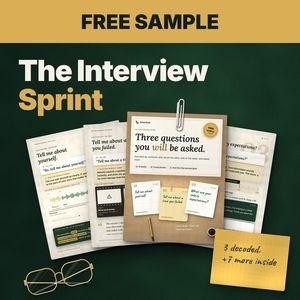
Free: 3 fill-in interview answers
“Tell me about yourself”, “a time you failed” and your salary expectations, with a fill-in answer for each. 5-page PDF.
Get it freeInterviewer Scorecards.
This question gets its own 5-page scorecard in the book: how interviewers score it from 1 to 4, a low answer next to a top one, how long each part of a top answer should take, and a worksheet to build yours. Ten questions in all.