
- Present
What you do now and what you’re good at. - Past
One or two things that prove it. - Future
Why this role is the logical next step.
What the interviewer is really checking
When I opened an interview with this, I wasn’t asking for your life story. I was checking:
- Can you summarize yourself clearly? If you can’t explain what you do in a minute, I’ll worry about how you explain anything else.
- What do you think matters? What you choose to mention tells me what you think is relevant to this job.
- Where should I dig? A good answer hands me the topics for my next questions. You get to choose them.
Answers that sink you
Unless you’re a recent graduate, start where you are now. Chronological answers run long and bury the good part.
They’ve read it. Pick the highlights and tell them why they matter.
Family, hobbies and where you grew up can come later in a friendly chat. They don’t belong in the opening answer.
If they glance at the clock, you’ve lost the room. Aim for 60 to 90 seconds.
An example answer
“I’m an operations coordinator at a logistics company, where I handle scheduling for a team of twelve drivers. My customer service background taught me to fix problems on the spot. Last year I rebuilt our scheduling sheet, and late deliveries dropped noticeably. Now I’m looking for a role with more ownership of the whole process, which is why this position caught my eye.”
Why it works: clear role, one proof point, and a forward-looking finish.
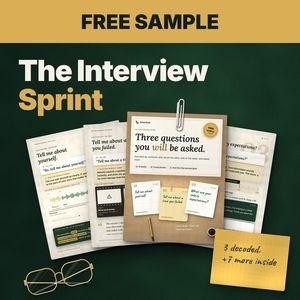
Free: 3 fill-in interview answers
“Tell me about yourself”, “a time you failed” and your salary expectations, with a fill-in answer for each. 5-page PDF.
Get it freeInterviewer Scorecards.
This question gets its own 5-page scorecard in the book: how interviewers score it from 1 to 4, a low answer next to a top one, how long each part of a top answer should take, and a worksheet to build yours. Ten questions in all.