
- Their need
Repeat the main problem this role solves. - Your proof
One or two results that show you’ve solved it. - Your extra
One thing that sets you apart from other good candidates.
What the interviewer is really checking
By the time I asked this, I usually had several qualified people. I wanted to know:
- Did you understand the job? Your answer shows whether you were listening to what we actually need.
- Can you connect the dots? I shouldn’t have to work out how your experience fits. You should tell me.
- Are you confident without being arrogant? I want someone who knows their value and can say it calmly.
Answers that sink you
Every candidate says this. Adjectives without proof are forgotten before you finish the sentence.
Honest, but it’s about you, not them. Hiring is about what you’ll do for the team.
You haven’t met them. Talk about what you bring, not what they lack.
“I think I’d be okay at it” doesn’t give the interviewer anything to defend when they argue for you later.
An example answer
“You need someone who can open new accounts, not just manage existing ones. That’s been my focus for three years: last year most of my revenue came from new clients I found myself. And because I worked on the buying side before sales, I know what makes a purchaser say yes.”
Why it works: it addresses the specific gap and ends with a memorable difference.
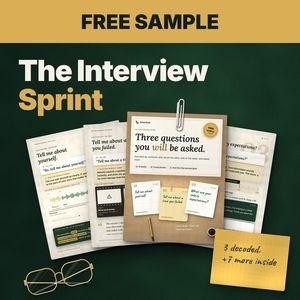
Free: 3 fill-in interview answers
“Tell me about yourself”, “a time you failed” and your salary expectations, with a fill-in answer for each. 5-page PDF.
Get it freeInterviewer Scorecards.
This question gets its own 5-page scorecard in the book: how interviewers score it from 1 to 4, a low answer next to a top one, how long each part of a top answer should take, and a worksheet to build yours. Ten questions in all.